
Does Civics Require Sacrifice?
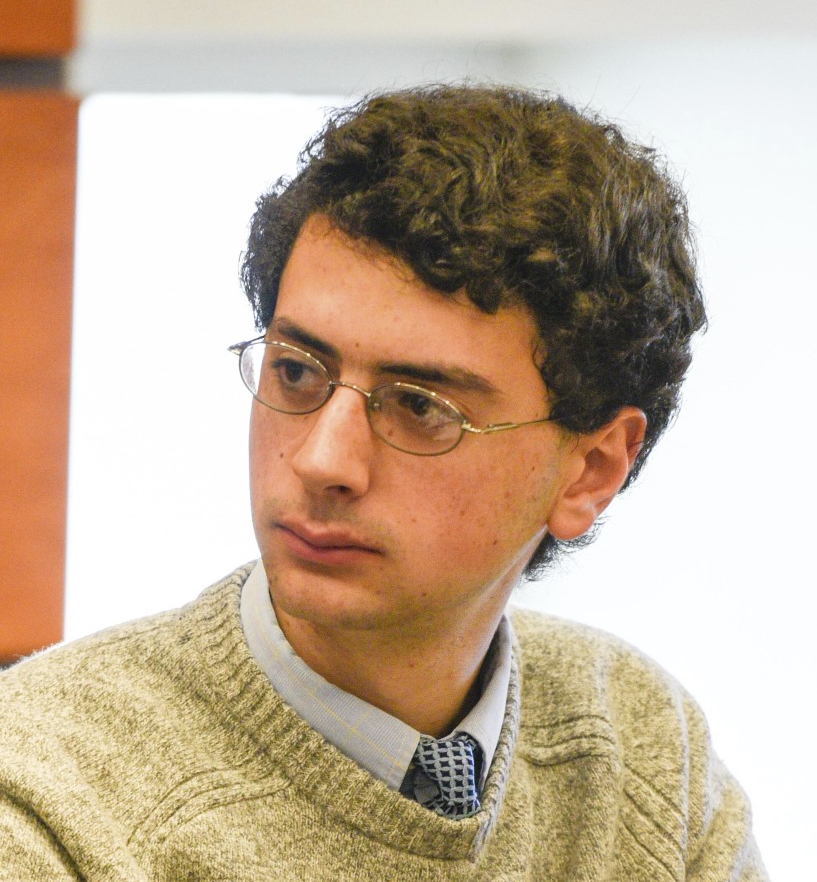
David Hamburger
The Paradox of Collective Morals
Polarized politics, atomized communities, and particularized identities: these are, it can often seem, bywords for modern civic life. So great is our distance from one another, and so consequential the loss that results, that Rabbi Sacks characterized the gap between a “we”-focused society and an “I”-focused society as the defining moral and political challenge of our time. [1]
In exploring this civic gap, Rabbi Sacks also identified a paradox: despite a growing embrace of individualism over universalism, “we do still care, and care passionately, about concerns that are essentially moral.”[2] The ardency of recent social protests, it might be said, speaks to precisely this duality. But what explains it?
A failure of community seems at least partly to blame. Our desire to “transcend our solitude,” in Rabbi Sacks’ phrase,[3] remains, but our means have atrophied in all the ways we know instinctively (and hear incessantly): the decline of local civic and social institutions; the internet-driven expansion of our social universes to geographic and numerical extremes; the fragmentation of the information landscape; and much else.
Community as Recognition
If these help unmake a community, what makes it?
Rabbi Joseph Soloveitchik located the origins of community in the act of encountering another, a human analogue of the divine attribute of self-limitation, by which “a community is established the very moment I recognize the thou and extend greetings to the thou.”[4]
The extension of greetings is thus an act of selflessness—the contraction of the self to make space for the other—that creates a relation of mutual existential recognition.[5] To deny recognition in this way, by contrast, strikes at the core of the very being of the negated other. It is in this sense, Rabbi Soloveitchik argues, that we can understand the great weight attached to the greeting of others—a weight so significant that failing to greet a needy neighbor can be tantamount to murder.[6] Recognition, by its consequence, has become obligation.[7]
The precise mechanism of action here defies singular explanation. Yet the impact is profound: recognition-as-obligation or recognition-before-obligation both create the conditions for moral action. “To welcome the Other is to put in question my freedom,”[8] wrote Emmanuel Levinas, arguing that it is from this limit to freedom that both moral consciousness[9] and the possibility of acting on it,[10] are born.[11] In this sense, one might respond to Rabbi Sacks’ argument that there is “no liberty without morality”[12] with the claim that there is “no morality without constrained liberty,”[13] for it its only in relation to the contraction of the freedom of the self, upon recognizing the other, that moral obligation can take form.
Conventional wisdom highlights that relationships require sacrifice to maintain. But an obligation framework suggests they also require sacrifice to establish. If we have lost the ability to build the relationships that give rise to community, then, our failure must at least partly follow from a deficit in the ability to do that which comes before community: to see the other. And if recognition of the other is an act of sacrifice, then our failure to see the other, in turn, suggests a problem with how we give of ourselves.
Self-Limitation as Civic Practice vs. Civic Principle
Giving—in the terms of Rav Soloveitchik’s essay, enacting self-limitation—at scale is a matter of civics. Thinking of community in terms of self-limitation is hardly alien to the republican civic tradition. Indeed, for thinkers like Locke, self-limitation is the defining element of civic society.[14] But this self-limitation is instrumental, not principally moral. It is a community born of the difficult realities of individual existence, the threat of violence and the chaos of anarchy. In both its voluntariness and its pragmatism, it forms a community of self-interest rather than one of self-sacrifice.[15]
Not so, however, for the recognition-based model of society, the community of encounter and self-limitation. In such a community, the key questions must not only be “how much liberty can I preserve?” but also “how much can I give up”—and, of equal concern—“am I giving the right things up?”
Calibrating Civic Sacrifice
In pondering these questions, the delicacy of embracing civic sacrifice becomes clear. Too little, and the I remains the central actor, at the cost of the Thou (and the We). Too much, and virtue runs the risk of becoming performativity. Perhaps this is one of the lessons of Parshat Vayakhel, a defining narration of the essence of community. As Moses calls the people to congregate and donate their finest possessions to the collective project of building the mishkan, contributions flow freely and willingly:
כׇּל־אִ֣ישׁ וְאִשָּׁ֗ה אֲשֶׁ֨ר נָדַ֣ב לִבָּם֮ אֹתָם֒ לְהָבִיא֙
all the men and women whose hearts moved them[16]
But as it becomes clear that the people have supplied more than the need requires, Moses issues another call:
וַיְצַ֣ו מֹשֶׁ֗ה וַיַּעֲבִ֨ירוּ ק֥וֹל בַּֽמַּחֲנֶה֮ לֵאמֹר֒
אִ֣ישׁ וְאִשָּׁ֗ה אַל־יַעֲשׂוּ־ע֛וֹד מְלָאכָ֖ה לִתְרוּמַ֣ת הַקֹּ֑דֶשׁ וַיִּכָּלֵ֥א הָעָ֖ם מֵהָבִֽיא
Moses had proclaimed throughout the camp:
“Let no man or woman make further effort toward gifts for the sanctuary.”
And the nation stopped bringing.[17]
Generous hearts tempered by judicious limits, the parsha seems to suggest, is the dialectical model mode for building a community that lasts.[18]
The Space We Make for Each Other
In this light we can re-approach the modern dilemma, the paradox of a culture of individuality coupled with a commitment to the collective cause of moral justice. Is our approach to community in keeping with the models of sacrifice and recognition theorized by Rav Soloveitchik and enacted in Vayakel?[19] Are we sacrificing to recognize the other, or to affirm our sense of self-sacrifice? Are we as keen to engage in self-limitation as we are to identify with giving of ourselves to a moral cause?
If we search for community without cost, or if we deify cost for its own sake,[20] we not only undermine the civic project. We fundamentally misunderstand it. Neither the sacrifice-as-martyrdom nor sacrifice-as-undue burden concepts can properly undergird an interpersonal or civic community. There is no shortcut to engaging the collective without the sacrifice of self-limitation. It is in recognition that first the “I” begins to construct the “We.”
[1] Jonathan Sacks, Morality: Restoring the Common Good in Divided Times (New York: Basic Books, 2020).
[2] Ibid, 301.
[3] Ibid, 35.
[4] The sentence bears reproducing in its entirety: “Of course this recognition [of the other] is, eo ipso, a sacrificial act, since the mere admission that a thou exists in addition to the I, is tantamount to tzimtzum, self-limitation and self-contraction. A community is established the very moment I recognize the thou and extend greetings to the thou.” Joseph Soloveitchik, “The Community,” in Confrontation and Other Essays (Jerusalem: Maggid, 2015), 12.
[5] There are strong parallels here with the concept of covenant and its attendant responsibilities in Rabbi Sacks’ thought. Recognition, however, precedes the entry into covenant and the acceptance of its if-then terms. (See, on covenantal if-then relations, Rabbi Sacks on Parshat Eikev in “The Covenant and the Love,” Covenant and Conversation, available at https://rabbisacks.org/covenant-conversation/eikev/the-covenant-and-the-love/.)
[6] Ibid.
[7] This formulation invites a host of related questions: What sort of community is formed in such an encounter, when space is made to recognize the existence of another? And how does it arise? Is it the sacrificial act itself that gives rise to the community? Or is the sacrificial act merely a prelude to an acceptance of obligation that follows? In short, is the sacrifice of recognition the same as the sacrifice of obligation?
[8] Emmanuel Levinas, Totality and Infinity: An Essay on Exteriority, trans. Alphonso Lingis (The Hague: Martinus Nijhoff, 1979), 85. Levinas did not, however, apply the same theory for encounters at scale, which in his telling implicated judgement as well as the freedom and sacrifice of the one-on-one encounter.
[9] Ibid, 84.
[10] “This human inversion of the in-itself and the for-itself (of "every Q man for himself") into an ethical self, into a priority of the for-the-other—this replacement of the for-itself of ontological persistence by an /henceforth unique certainly, but unique because of its chosenness for a responsibility for the other man—inescapable and nontransferable, this radical turnabout would take place in what I call an encounter with the face of the other. From behind the bearing he gives himself— or puts up with—in his appearance, he calls to me and orders me from the depths of his defenseless nakedness, his misery, his mortality. It is in the personal relationship, from me to the other, that the ethical "event," charity and mercy, generosity and obedience, lead beyond or rise above being.” Emmanuel Levinas, “Dialogue on Thinking-of-the-Other” in Entre Nous: On Thinking of the Other, Michael B. Smith and Barbara Harshav, trans. (New York: Columbia University Press, 1998), 202.
[11] Even so, whether sacrifice merely is needed for the space to recognize—with recognition itself containing obligations that constrain freedom—or whether recognition, rather, precedes sacrifice remains a question unanswered here. Both Recognition -> Sacrifice -> Community and Sacrifice -> Recognition -> Community seem potentially viable mechanisms of action. But regardless of the order of operations, the end result remains.
[12] Morality, 20.
[13] And to go further: at its thickest, community begins with recognition but proceeds to obligation.
[14] John Locke, Second Treatise on Government, para 87 in The Works of John Locke, A New Edition, Corrected, in Ten Volumes (London: Tegg, 1823).
[15] “[T]here, and there only, is political society where every one of the members hath quitted this natural power, [and] resigned it up into the hands of the community […]” writes Locke in the Second Treatise, noting that “the commonwealth comes by a power to set down what punishment shall belong to the several transgressions they think worthy of it, committed amongst the members of that society (which is the power of making laws), as well as it has the power to punish any injury done unto any of its members by any one that is not of it (which is the power of war and peace); and all this for the preservation of the property of all the members of that society, as far as is possible.” John Locke, Second Treatise on Government, para 87 in The Works of John Locke, A New Edition, Corrected, in Ten Volumes (London: Tegg, 1823). Having entered into this form of society, as Rabbi Sacks notes in Morality, involves assumptions of joint risks: “[T]o be a citizen of a state, or a resident in a neighborhood, is to be involved in a collective fate of some kind” (see Jonathan Sacks, Future Tense: Jews, Judaism, and Israeli in the Twenty-First Century (New York: Schocken, 2009)).
[16] Exodus 35:29, based on Sefaria translation.
[17] Exodus 36:6, based on Sefaria translation.
[18] This narrative may also raise interesting related questions of zealotry and civic performativity—how much should we be seen to act the civic values and obligations of community? How are we to think of the performativity necessary to build the norms by which a community functions, but which when overdone makes the appearance of sacrifice a tool of demagogues?
[19] There is naturally a great distinction to be drawn between the type of material sacrifice reflected in the parsha and the type of interpersonal sacrifice that begins with recognition of the other. But the common questions of how to give, and how to self-limit, in pursuit of the building of a collective offer interesting parallels nonetheless.
[20] By which I mean sacrifice as an end, especially performative sacrifice, and the related dynamics of enforced conformity in some contemporary social movements. A community that demands sacrifice-as-conformity rather than self-limitation-as-recognition cannot be a healthy collective moral undertaking.
David Hamburger was an LSJS Rabbi Sacks Learning Fellow 2022-23.
This article forms part of his fellowship project, bringing Rabbi Sacks’ Torah and ideas to a wider audience.

